Through the Queer Looking Glass
Why Our Intersectional Lens Tend to Crack

A couple weeks ago, a friend asked me, “what does it mean to be queer?” It was a fundamental inquiry about an identity I claim proudly. In theory, it should have been an easy question. I choked.

The answer is so internalized in my psyche that I couldn’t speak it out loud. I couldn’t assign words to the experiences, feelings, and perspectives that I had interwoven into a multi-dimensional pattern I call queerness.
Several really awkward beats of silence passed before I admitted defeat. I could name it but I couldn’t describe it.
Queerness has become, for me, a sort of I know it when I see/read/hear it phenomenon. Like the directions to a location that I have driven for years, I could no longer explain how I got there. The obvious results of this journey are my somewhat fluid, kind of androgynous, exterior along side my political and spiritual interior. That combination demonstrates how queerness can exist but it doesn’t exactly explain what queerness means.
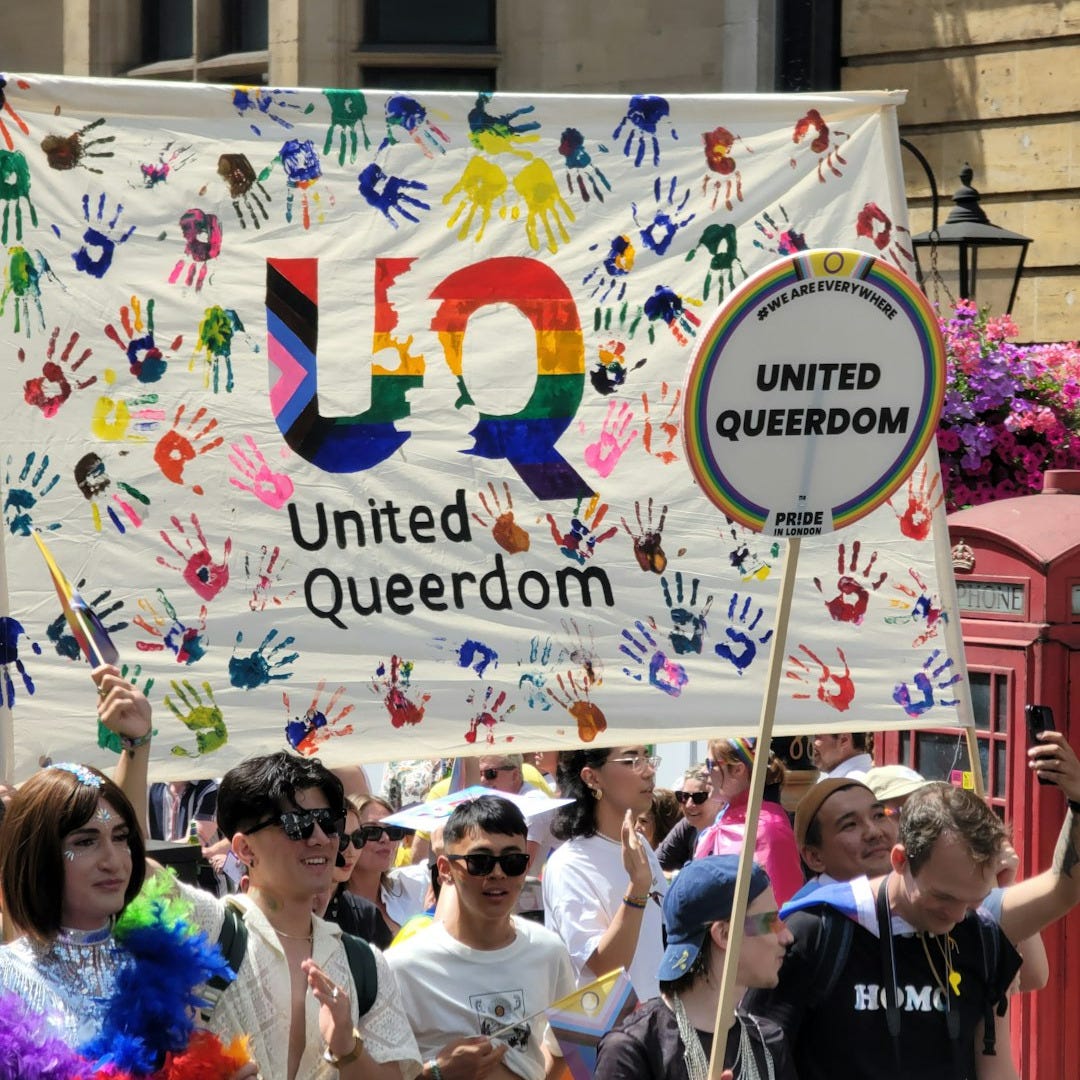
My identity is rooted in the history of queerness, of the evolution of how a word that simply meant “odd” became a slur to mean “gay man”, then became a nastier slur to mean “anyone who is a sexual deviant”, and finally went through rounds of short-lived reclamation as a word of empowerment. I was a youngster when the slogan “We’re here, we’re queer, get used to it” became the anthem of late 1980s AIDS activism. I emerged as a freshly minted adult during the Queer Theory academics of the 1990s. Now, in the turbulent 2020s, the term queer means significantly more to me than a sexual orientation or a political stance.
Spoiler alert: This week’s Op Ed article in The Advocate, “I’m queer, not gay. It matters.” by Chase T. M. Anderson, contains a similar pattern. Choosing the label queer is as much about defiance as it is about a greater meaning of liberation.
Which leads me to the original thesis for this Weekly Spark:
The first feminists were queer.
Yes! I had responded to myself, when this idea slapped my brain in the middle of a groggy morning shower. Of course!
After the initial glee dissipated, I was left with the nagging demands of how and why. And I remembered my friend’s earlier question — what does it mean to be queer? — haunting me.
I have no basis for this assertion other than the plethora of bisexuals, lesbians, and trans (i.e., “lived their lives as women/men until their discovery/demise during illness/death”) people who pioneered multiple feminist movements throughout our history of Western Civilization.

You know, the people who brought you Boston Marriages (late 19th Century New England), argued for rooms of our own (Virginia Woolf, early 20th Century), dreamed about women-oriented utopias (The Book of the City of Ladies, Christine de Pizan, mid 15th Century), and warned us against using the master’s tools (Audre Lorde, mid 20th Century). Even the quirky women and AFAB people who refused to conform to conventional promises, such as Mary Shelly who invented socially/politically conscientious science fiction in response to a dare at the age of 17. Even the literary legend Sappho, from whose fragments of poetry and life we derived the word sapphic, was ultimately queer.
Feminism is queer.
On the one hand, it is that simple. On the other hand, it most definitely is not.
Depending on your generational influences, different names and faces will float to the surface when you encounter the word feminism. The definitions, the movements, and the people attached to the corresponding politics change significantly from era to era. Sometimes it is separatist, sometimes it is cross-sectional, sometimes it is more personal than political, sometimes it is blinded by a privileged agenda, sometimes it is intertwined with a proletariat struggle.
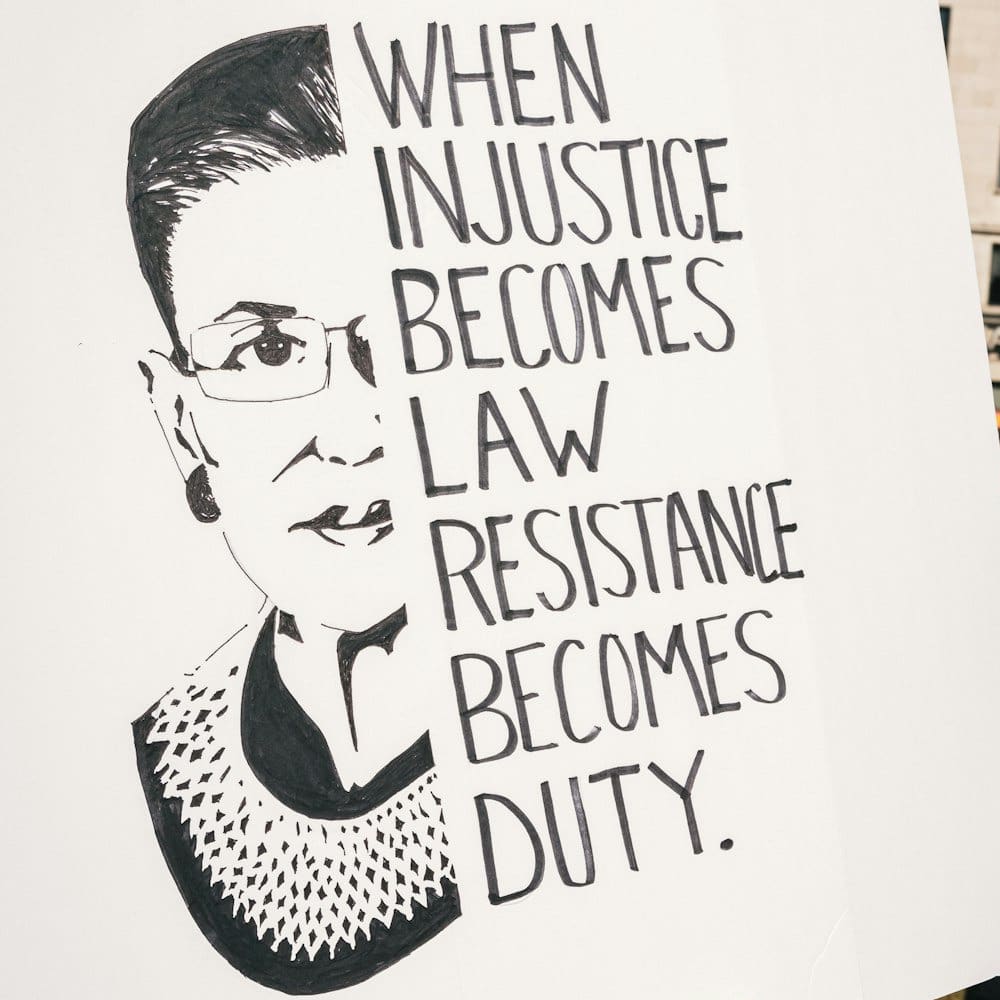
Yet that continual defiance against conventions — the desire for equality and expression, for activism and actualization, for self-definition and self-determination — is our common ground. This is the lens that can help us see intersectional solutions to systemic problems.
When our queer lens is centered on our personal circumstances (such as our gender or sexual orientation), it will eventually crack under the pressures of social and political integration. Being able to integrate does not mean giving in to respectability politics or internalizing the dominant beliefs or tolerating discrimination. Because we have been pushed to the margins, our voices should remain loud and proud. And, because we find ourselves standing next to other marginalized communities, we have opportunities to refocus our lens and see our related goals.

That’s why asserting that Feminism is Queer can be an important step forward. In the end, it may not matter whether my thesis is accurate or not. What does matter is understanding how we can stand together and leap through the looking glass, hand in hand.
To learn about how I can help you actualize your best queer self, check out The Queer Muse website.